
Yes. Drawing is a very good adult hobby. It is cheap, quiet, portable and calming. You need a pencil and paper to start, you can do it in ten minutes or an hour, and nobody has to see what you make. It is also honest work, meaning the early weeks are humbling and progress is slow. I will cover those downsides too.
Why Drawing Is Such a Great Hobby For Adults
I picked up a pencil at 44, the fall my daughter left for college. Before that I had spent twenty years keeping the books for a freight company in Kansas City. Zero art classes. No talent to speak of. The house got quiet, and I bought a drugstore sketchbook because I needed something to do with my hands besides scroll my phone. That was years ago. I am still at the kitchen table most evenings, and what started as boredom filler turned into the steadiest part of my day.
Drawing offers a screen-free creative output and helps reduce stress. That sentence sounds clinical, but what it feels like is this: after eight hours of spreadsheets, sitting down with a pencil and a mug to sketch is like stepping into a quieter room. I have drawn with the house asleep, at airports, at my daughter’s apartment while she cooked, and in the parking lot while my wife finished shopping. It goes wherever you go.
The cost is almost nothing. One HB pencil, one 2B pencil, a basic A5 sketchbook and an eraser will run you under twenty dollars in 2026 prices. Sketch pads cost about five to six dollars. Individual pencils run two to ten dollars depending on brand. If it does not stick, you have lost the price of lunch, unlike hobbies that need a garage full of gear.
If you feel too old or too busy, this guide is written for you. Drawing has one of the lowest barriers to entry of any creative hobby. It can be done with just a pencil and paper, and anyone can start drawing with minimal investment. By the end you will know the first steps to start drawing, how to fit it around a job and family life, and which different techniques to explore if you decide to keep going. And if you are wondering whether it is too late to learn how to draw, I started at 44 with stick figures that embarrassed me. It is not too late. I wrote more on whether it’s too late to learn to draw, if you want the longer answer, in whether it’s too late to learn to draw.
What Drawing Gives You
Drawing is a low-barrier creative outlet that offers mental health benefits most people do not expect from a hobby this simple. Here is what adults actually get from it:
-
A form of moving meditation. Mindfulness means paying attention to the present moment on purpose, without judgment. Drawing from observation forces exactly that, because you cannot draw what you are not looking at. Drawing enhances mindfulness and promotes present-moment awareness. One study of adults aged 65 to 87 found an 8 percent increase in self-reported mindfulness after a drawing intervention.
-
Sharper eyes. Drawing sharpens observational skills by encouraging detailed observation of edges, shapes and light. Observation in drawing enhances the ability to perceive details you walked past for years. After a few months I started noticing how light fell across a stairwell at work, something I had climbed every day for a decade without seeing.
-
Emotional processing. Drawing offers a tangible medium for self-expression and processing emotions. It can help express emotions and cope with difficulties in a way that writing or talking sometimes cannot.
-
Better memory and focus. Drawing engages both brain hemispheres during the creative process. Regular drawing is linked to improved cognitive function and memory retention. A meta-analysis of 36 trials found that people who drew information recalled significantly more than those who used verbal methods alone. Practicing drawing can enhance concentration and patience in a way that carries into daily life.
-
Quiet unwinding. 59 percent of UK adults use drawing to unwind. That number did not surprise me. The main reward is the process itself: focusing on one thing and observing shapes, shadows and detail instead of checking email. Drawing makes attention nearly automatic because you cannot draw what you are not looking at.
After twenty years of spreadsheets and ledgers, a page of pencil marks, however clumsy, felt like a different kind of finished. You do not need talent, an audience or a plan. Drawing can teach critical life skills like patience and observation, and it can stay entirely private. It is a great hobby for anyone who wants a creative outlet without long art classes or expensive gear.
First Steps: How to Start Drawing This Week
Here is a simple plan for your first seven days. Pick one object from your home each day and draw it for ten to fifteen minutes. That is the whole system.
-
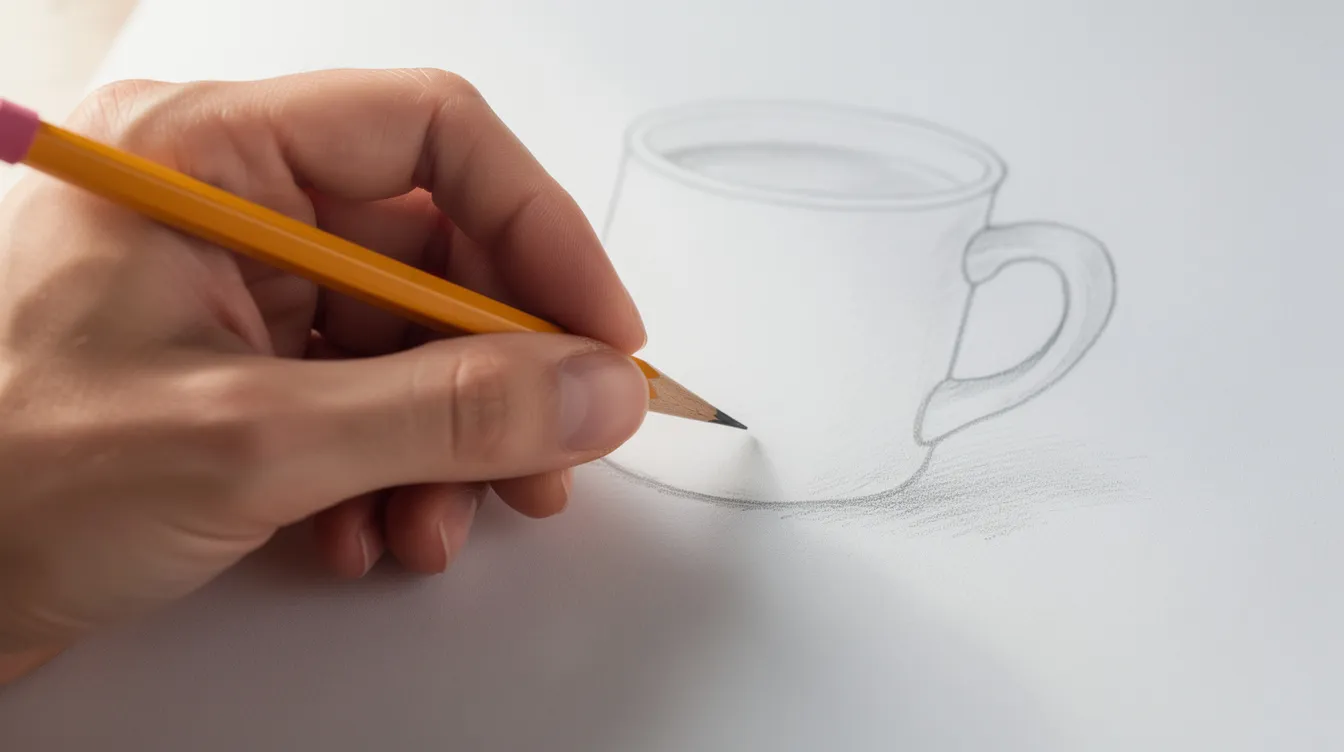
Day 1: A mug
-
Day 2: A shoe
-
Day 3: A spoon
-
Day 4: A plant
-
Day 5: Your keys
-
Day 6: A book standing upright
-
Day 7: The same mug from day one, to see what changed
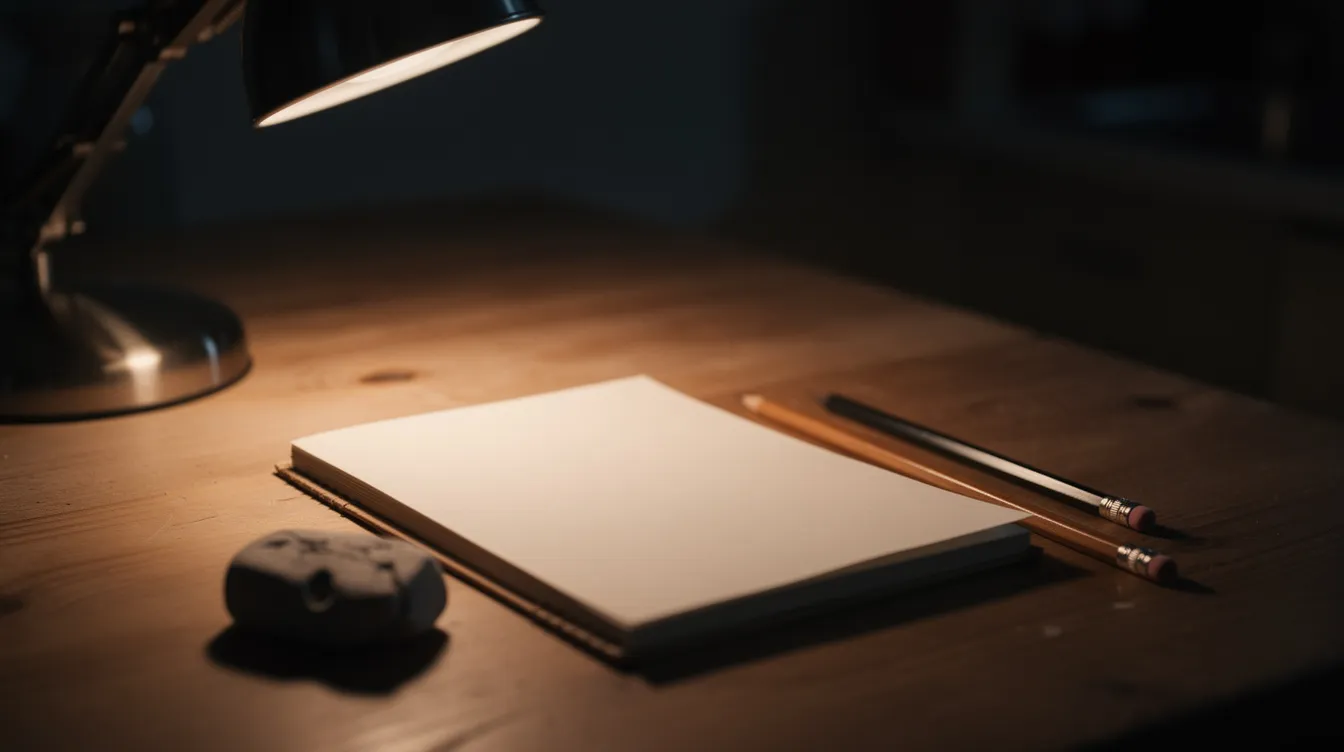
Set up a tiny drawing corner: a chair, a flat surface, a lamp and your sketchbook. When everything is already out, starting feels frictionless after work. Date every page and write one line about what felt easy or hard. Dated sketchbook pages show progress over time, and keeping a chronological sketchbook helps track that progress in a way you will appreciate months from now.
The goal in these first steps is not realism. It is showing up. I will be honest: the early drawings are bad. Mine were bad. Everyone’s are bad. It is beneficial to treat early drawings as low-stakes learning experiences rather than finished art. Short sessions repeated often teach your eye more effectively than long sittings, and spending short daily sessions drawing builds a sustainable practice faster than weekend marathons.
My low-commitment test: twenty minutes on a mug or shoe across five days. If you enjoyed even two of those sessions, you have a new hobby.
Finding Your Interest: What To Draw When You Feel Stuck
Most people freeze at “What should I draw?” and that question can quietly kill a creative journey before it starts. The answer is simpler than you think: draw what is already in front of you.
Start with everyday subjects that help you find interest in ordinary life: a coffee mug, shoes by the door, a balcony view, a plant on the windowsill, fruit from a grocery run. These mundane objects carry more visual information than you expect, and drawing them teaches you to see form, light and texture in your own world.
Try themed weeks to build momentum and get more ideas flowing:
-
Kitchen week: utensils, mugs, bottles, a cutting board
-
Desk week: pen, headphones, stapler, a stack of papers
-
Commute week: train seats, station signs, fellow passengers sketched from behind
Repeating one object on different days is surprisingly useful. It reduces decision fatigue, and each attempt reveals detail you missed the first time. Drawing helps document observations and experiences that would otherwise pass unnoticed.
Write a list inside your sketchbook cover titled “Things I can draw when I am tired,” with ten concrete objects chosen in advance. On exhausted evenings, open to that list and pick one. A creative block often comes from too many choices, not too few. Learning to find interest in mundane things changes how you see daily life. Suddenly a crumpled towel on the bathroom floor looks interesting.
Starter Materials and When To Add More
You do not need much. Drawing as a hobby requires few initial tools to begin, and buying too much on day one is a reliable way to avoid the actual drawing. Here is what to start with and why:
-
One HB pencil (about $2.50 to $4): a good middle-ground hardness for light lines and general sketching
-
One 2B pencil (similar price): softer, for darker lines and basic shading
-
A kneaded eraser (under $3): lifts graphite gently without tearing paper
-
An A5 sketchbook with at least 120 gsm paper (about $5 to $6): heavy enough that your pencil will not tear through or bleed
An A5 sketchbook and HB pencil are ideal for beginners, and the whole set costs under twenty dollars. That is it. Drawing can be started with almost zero investment.
Gear is a fun way to avoid drawing, so stay with the basics for the first few months. Add tools only when you hit a specific problem:
-
After two to three weeks: A 4B or 6B pencil, once your shading looks flat and you want darker values
-
After a month or two: Charcoal for expressive texture, or fineliners if you want crisp ink lines
-
When you notice smudging: A blending stump or fixative spray
Frame every purchase as solving a problem (“my lines smudge,” “I want darker shadows”) rather than browsing art supply stores for inspiration. The pencil teaches you. The paper holds the evidence. Everything else can wait.
Basic Drawing Skills Every Beginner Should Learn
Adults do better with a small, focused skill list than a long syllabus. Here are the fundamentals that matter most for a beginner:
-
Shapes and form: cubes, cylinders and spheres are the building blocks of everything you will ever draw. A mug is a cylinder. An apple is a sphere. Simple exercises using basic shapes can improve drawing skills faster than copying photographs.
-
Proportion: seeing how big one thing is relative to another. Is the handle half the height of the mug, or a third?
-
Light and shadow (values): understanding the range from light to dark, including cast shadows and reflected light. This is what makes a flat circle look like a sphere.
-
Perspective: even basic one-point perspective, where parallel lines converge toward a vanishing point, helps you draw rooms, streets and objects that sit convincingly in space.
Seeing big shapes before details is the one thing that speeds progress more than any gadget or trick. Start each session with a five-minute warm-up: straight lines, circles and boxes. Regular practice, even in short sessions, aids hand-eye coordination and builds the control you need for longer drawings.
Try one skill focus per week. “This week I only practice cylinders.” “This week I notice light and shadow on every object I draw.” Hobby-level basics are enough to enjoy sketching for years, and I got there without any art training.
Different Techniques You Can Explore Over Time
Once you are comfortable with plain graphite, the world of techniques opens up. Here is a short guide to the ones worth trying:
-
Contour drawing: drawing the edge of an object without looking at the paper, which forces your eye to lead and your hand to follow
-
Gesture drawing: very quick sketches, sometimes just seconds, capturing the energy and movement of a figure rather than detail
-
Cross-hatching: building up tone through layered intersecting lines, good for texture in buildings or fabric
-
Blending: using tissue, a stump or your finger to smooth pencil marks into gradual tones, ideal for still life
-
Ink line work: using a pen or fineliner for bold, permanent marks that teach you to commit to every line
Connect techniques to goals. Gesture drawing is excellent for sketching people on the train. Cross-hatching suits urban scenes. Blending brings a still life object to life. Try one new technique per month so the hobby stays fresh.
I stayed with plain pencil for the first months and added techniques only once I was bored. You can learn drawing skills through online tutorials, YouTube channels and free course materials at your own pace, building a visual library of approaches over time. If you want some structure, I wrote up the online drawing courses I’d start with. Variety prevents boredom, but repeating one technique over several sessions is what actually grows technical skill.
Simple Beginner Projects in a Practical Sequence
Busy adults learn best from a clear project ladder rather than random tutorials. Here is a sequence where each project builds on the last, moving from simple shapes to perspective and figure work:
-
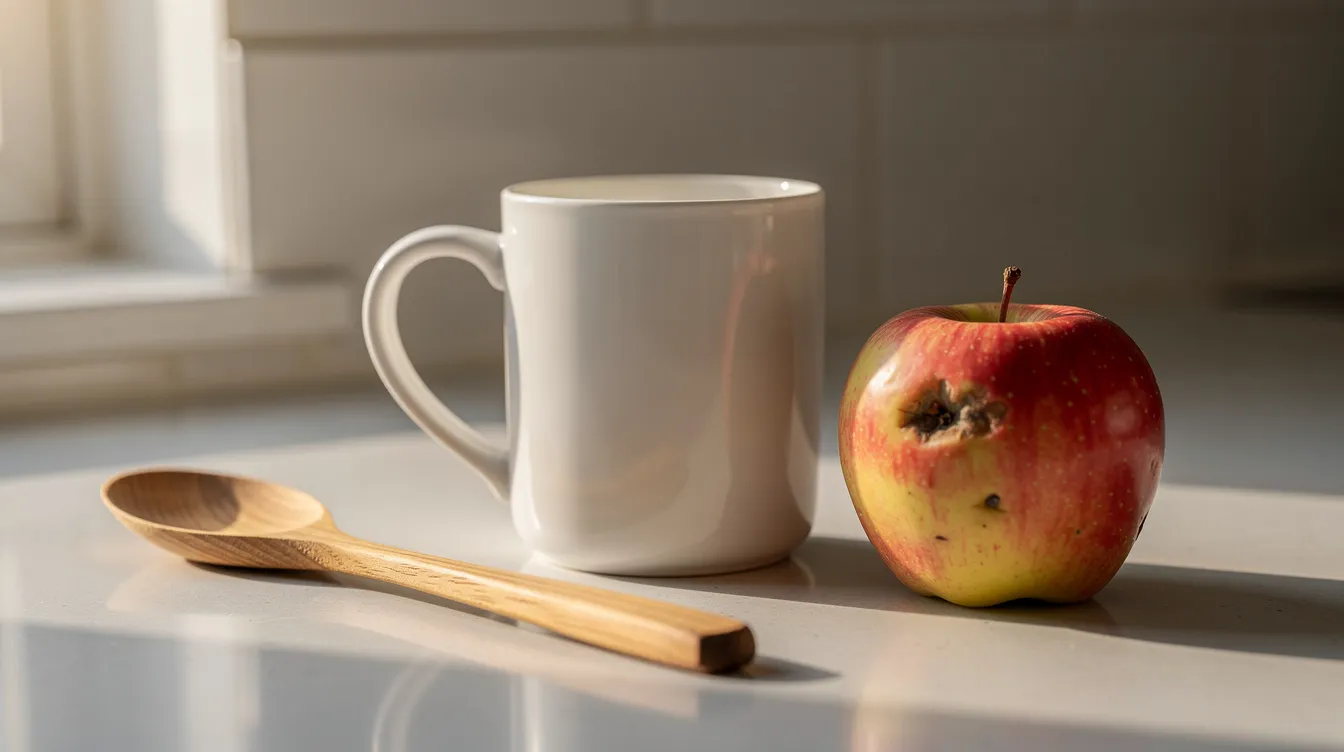
Single desk object (mug, spoon): focuses on basic shapes, light and shadow
-
Three kitchen items together: introduces overlapping, composition and how objects relate
-
A pair of shoes: curves, texture, a bit of perspective
-
A corner of your living room: multiple planes, furniture, varied angles
-
A mirror self-portrait: reflection, proportions of the face, a personal challenge
-
A street scene from a café window: perspective, distant figures, light variation
There is no rush. Stay with a project for several sessions and repeat any that feel shaky. Once you finish the list, repeat it three months later. Photograph your start and end pages into a dated folder on your phone. The comparison will surprise you.
Practice Routines That Fit a Busy Adult Week
Trying to draw for an hour every day usually fails within a week. Mid-career adults have jobs, families, commutes and bodies that are tired by eight o’clock. A realistic routine looks different.
Aim for three sessions of 15 to 20 minutes weekly. For example, Monday, Wednesday and Saturday evenings. That is enough to enjoy drawing and see progress without burning out. Choose a routine that fits a busy day, not one copied from a full-time art student.
Attach sessions to habits you already have:
-
After breakfast, before checking email
-
After the kids go to bed
-
On a train ride or during a lunch break
-
Just before picking up your phone in the evening
Keep sessions low-friction: same spot, same pencil, same lamp, and a prepared list of what to draw. Set an easy minimum of ten minutes for tired days so the hobby never feels like a test. Short, repeatable sessions teach your eye more than long sittings, and 46.6 percent of adults engaged in visual arts activities in a recent survey, suggesting that plenty of people find the time when the barrier is low enough.
My honest take: it takes a few evenings a week, and you have to protect them. Nobody will hand you the time. Revisit your routine every four to six weeks and adjust it based on real life, not guilt. If you need more help fitting sessions into a packed week, the core idea is always the same: keep it short, keep it regular, and forgive yourself when you miss one. I wrote more about how to find time to draw when the week is packed.
How Drawing Supports Wellbeing Without Becoming Therapy
I will not claim drawing cures anything. But I finish an evening session calmer than I started, and I have seen the same in everyone in my sketching group. Drawing can reduce stress and anxiety levels. It demands steady attention and rewards you with a sense of mastery from visible progress, plus less evening screen time.
Drawing can serve as a therapeutic activity for PTSD and other difficulties, but it is a complement to professional care, not a replacement for it. If you are dealing with anxiety, depression or trauma, a sketchbook is a good companion, not a doctor.
For people who dislike a blank page, gentler on-ramps exist. My wife found coloring easier because a page with lines already drawn takes the pressure off. If that appeals to you, Lisa Mitrokhin’s Color Me Centered course at It’s Easy To Draw treats coloring as a real practice with genuine technique, and what you learn there carries over into drawing. I am a genuine fan of her teaching. If you want mindful coloring with real technique, start there.

Drawing as a Social and Shared Hobby
Many adults assume drawing is solitary. It can be, and that is part of its appeal. But it can also connect you to people in ways that surprise you.
I am part of a sketching group that meets at cafés, libraries and parks. We are mostly people who started after 40: a retired nurse, a long-haul trucker, a dentist, two grandmothers. We draw, talk and trade advice, and it is one of the few places I have made new friends as an adult. The art community for hobbyists is quieter than what you see on social media, but it is real and welcoming.
Ways to share without pressure:
-
Send a weekly photo of a sketchbook page to a friend
-
Join a local sketching meetup or urban sketching group
-
Try a life drawing evening at a community center
-
For those with nothing local, online communities and art classes offer connection from home, in your own time
Imperfect work builds the strongest connections. Nobody in my group posts polished pieces. We post process. 46.6 percent of adults engaged in visual arts activities in 2016/17, which means there are more of us than you think. Sharing is optional, though. The hobby is complete even if nobody else ever sees a single page.
From New Hobby To Lifelong Practice
A new hobby feels fragile in the first months. Small choices keep it alive. Years in, I am still at the kitchen table most evenings, and that came from keeping it small.
Set gentle milestones rather than hard goals. “Fill one sketchbook by March 2027” works better than “become good at drawing.” Schedule one longer session, like a 45-minute Saturday café sketch, every two or three weeks to work on more ambitious pieces.
Try a seasonal challenge like “30 drawings in November” with concrete prompts. Review old sketchbooks over six or twelve months. The gains in line confidence, proportions and shading are visible, and that progress is the fuel that keeps you going.
Exploring Styles Without Losing Yourself
Social media exposes you to every style imaginable: hyperrealism, cartoons, manga, line art, geometric work. Treat them as experiments, not destinations. Most artists end up with a personal style that grows slowly from repeated choices rather than a single decision.
Test styles with mini-projects: a week of line art portraits, a week of cartoon objects, a week of loose pen-only sketching. Note which drawings were fun to make, not just which ones looked good. A sustainable style grows from joy in the process, not from copying someone else’s finished product.
Avoid comparing yourself with a professional artist whose first drafts you never see. The entertainment industry and illustration world showcase polished final work, not the messy learning process behind it. Compare against your own drawings from three or six months ago. That is the only comparison that matters.
When Your Hobby Starts To Improve: Handling Expectations
There is a moment when adults notice clear improvement and wonder whether they should be “doing more” with their art. Rising expectations can drain the joy from a great hobby when the focus shifts from practice to performance. Be honest with yourself: progress is uneven, with plateaus common around three to six months where nothing seems to move. Research suggests about 50 hours of focused practice yields noticeable improvement, and drawing from life convincingly takes closer to 500 hours. If you are wondering how long it takes to learn to draw, those numbers are realistic timelines.
Stay grounded:
-
Alternate learning sessions (focused on weaknesses) with playful sketching where results do not matter
-
Set one written intention at the start of each sketchbook (“This book is only for experiments”)
-
Accept that not every page will be good, and that practice makes perfect is a direction, not a promise
-
Never stop learning, because the moment you stop learning is the moment the hobby gets stale
Not every skill must be monetised. Private, pressure-free drawing is healthy and complete on its own.
Could Drawing as a Hobby Lead To Side Income?
Some adults eventually want to earn a little from their creativity. Low-pressure options include selling postcard-sized prints at local markets, accepting the occasional family portrait commission, or designing simple greeting cards.
Protect the joy first. Start with one very small paid experiment. Limit commissions to a set number per month, and treat any income as art budget for materials or workshops. Painting or illustration for money changes the relationship with drawing, so move slowly.
Not wanting to monetise is perfectly valid. Many adults I talk to through The Hobby Artist find more satisfaction in personal sketchbooks than in paid work. The hobby does not need to justify itself with income. It justifies itself with the quiet pleasure of making something with your hands.
Final Thoughts: Saying Yes To Drawing As Your New Hobby
Drawing is a great hobby that fits adult lives. It is cheap, flexible and full of small, repeatable pleasures. The downsides are real: slow progress, humbling early weeks, and the occasional evening where nothing on the page looks right. But it is also free of pressure, rich in personal growth, and surprisingly good at making you see the world more clearly. 59 percent of UK adults use drawing to unwind, and that number tells you something about what a pencil and a quiet room can do.
Here is what I would suggest:
-
Commit to a 30-day experiment starting this week
-
Aim for three short sessions a week, each 15 to 20 minutes
-
Use one small sketchbook and date every page
-
Draw objects from your home, not from your imagination
-
Explore techniques slowly, and build routines around real life
You are a person who draws from the very next sketch, not after some future skill milestone. You do not need to doodle perfectly. You do not need inspiration to strike. You need a pencil, a page, and something to look at.
Pick one object near you right now. Open a blank page. Make the first marks. That is how every creative journey starts, and most of the fun is in the process, not the product.
FAQ
Is drawing a good hobby if I have no talent?
Yes. Drawing is a skill built by practice, not a gift. I had no talent to speak of, and plenty of adults with shaky lines draw comfortably within a few months. Studies confirm that age does not moderate the ability to learn to draw. Most students of drawing improve through regular, focused practice rather than innate ability.
How much time does drawing take?
Twenty to forty minutes a few times a week is enough to enjoy it and see progress. Aim for three sessions of 15 to 20 minutes weekly. You can do less on busy weeks. Short sessions repeated often teach your eye more effectively than occasional long sittings, and the habit matters more than the duration.
What do I need to get started?
A sketchbook and a pencil, with an eraser nice to have. Use an A5 sketchbook and HB, 2B pencils to start. Add other tools later, once you know what you like to draw. The whole setup costs under twenty dollars.
Is drawing good for relaxation?
Many people find it calming because it demands steady attention and gives you something to focus on besides your worries. It is not a medical treatment, but it is a pleasant way to wind down. Drawing promotes mindfulness and present-moment awareness, and the simple act of looking closely at an object and putting lines on paper is an excellent way to step out of your head for a few minutes.