

I kept the books for a freight company for twenty years. I picked up a pencil at 44, the fall my daughter left for college, and I started drawing at the kitchen table after dinner while the house was quiet for the first time in eighteen years. I had a forty-minute commute each way, a house that needed fixing, and about as much art background as the average parking meter. If you want to draw but you work a full time job, have kids, and feel permanently tired, I have good news: you do not need to quit anything or wake up at 4 AM. The core idea is simple. Attach 10 to 20 minute drawing sessions to something you already do, and protect those small windows the way you protect a dentist appointment. A daily 15-minute sketch adds up to over 90 hours of drawing practice in a year, enough to see real progress.
This post is for adults who feel they missed the boat on becoming an artist. I write from my own busy life, not from an idealized studio. If you are worried you started too late, I hope this helps: time, not age, is the real constraint for most people. The goal is a sustainable drawing habit built from 10 to 30 minute pockets, not from perfect three-hour blocks that never come. I wrote separately about whether it’s too late to learn to draw as an adult, in case that worry is a loud one for you. If you are still deciding where to begin, my guide to first steps for adult beginners covers the basics.
Step 1: How to Find Time to Draw by Seeing Where Your Time Really Goes
Before you can find time to draw, you need to see how you spend time now. “I have no time” is almost always a feeling, not a measurement.
Try a seven-day experiment. Log one ordinary week in 30-minute blocks on a paper calendar or a simple spreadsheet. Use four or five color codes: job, family and chores, rest and sleep, social media and passive entertainment, commuting and waiting. Be ruthlessly honest. Include the 9 PM sofa scroll and the late night YouTube session.
Here is what mine looked like on a Tuesday: 7:30 to 8:00, Instagram. 20:30 to 21:00, Netflix. Those two half-hours alone were an hour of drawing time I did not realize I had.
When I did this exercise, the “free hours” I imagined never showed up in the log. What I found instead were scraps of time around things I already did. That is when I stopped hunting for big blocks and started looking for hidden pockets. Those hidden pockets were enough to fit drawing into a week I had thought was full.
Step 2: Cut the Hidden Time Thieves (Especially Social Media)
Now connect your audit to the first obvious target for your drawing time: unplanned screen time. Reels before bed. YouTube shorts at lunch. Checking social media every ten minutes while supposedly relaxing on the sofa.
Total your screen blocks and convert them to weekly hours. If you lose 25 minutes a day to scrolling, that is almost three hours a week. Swapping social media time for drawing can recover 20 to 30 minutes of focus every single day, enough for a real sketch.
A few strategies that worked for me:
-
Remove social media apps from your home screen so you have to search for them.
-
Set a 15-minute app timer. When it buzzes, you are done.
-
Keep the phone in another room during your evening drawing time to protect your focus.
-
Try listening to an album or a podcast while you draw, so the phone stays put.
-
Draw during the first half of a TV episode instead of binge watching the whole season in one sitting.
I will be honest, as I think Paul at The Hobby Artist should be: trading screen time is the uncomfortable one. But it is usually the easiest time for drawing to claim. The goal is not to ban all fun. It is to reclaim one or two daily windows. It feels odd for a week, then it becomes normal.
Step 3: Decide How Much Time to Draw (Before You Decide When)
Vague goals like “I’ll do more drawing this year” fail. A concrete decision like “I do 20 minutes of drawing a day, 5 days a week” tends to stick. Here are three realistic packages:
|
Package |
Daily time |
Days per week |
Yearly total |
|---|---|---|---|
|
Beginner |
10 minutes |
4 |
~35 hours |
|
Steady |
20 minutes |
5 |
~87 hours |
|
Ambitious |
30 min + one 60-90 min weekend session |
5-6 |
~200+ hours |
Even the beginner version counts. Drawing for just 20 minutes daily builds a habit, and a 20-minute sketch is real practice, not pretend. Five 20-minute sessions beat one 2-hour session crammed into a weekend. Set a timer if it helps you stay honest.
What finally worked for me was not finding time but shrinking what counted as a drawing session until it fit the time I already had. The adults I know who improved fastest did a little drawing nearly every day, often badly, often tired. If you wonder how long it takes to see progress, the short answer is that 100 hours of practice with real focus gets most beginners to competent everyday sketches. I go into more detail on how long it takes to learn to draw in another post.
Write your commitment in plain language: “From 1 January to 31 March I will do 15 minutes of drawing every weekday.” That sentence is your schedule.
Step 4: Turn Mornings Into Protected Drawing Time
For many adults, early morning is the quietest part of the day. Before emails, before the children wake up, before other things start shouting for attention, you can be an early bird with a pencil.
The scenario is simple: get up 20 to 30 minutes earlier to make room for drawing. If you normally rise at 7:00, try 6:30. But sleep comes first, so move bedtime back to 22:30 instead of 23:00 rather than cutting rest.
Here is the trick: build drawing into your daily routine by stacking it onto something you already do. Draw right after your morning coffee. The coffee habit you already have becomes the reminder for the new drawing habit. This is the “habit stacking” idea popularized in Atomic Habits, and it works because you do not need willpower to remember.
Half-awake exercises that require zero genius:
-
Two pages of gesture drawings from a photo reference
-
Ten thumbnail compositions of whatever is on the breakfast table
-
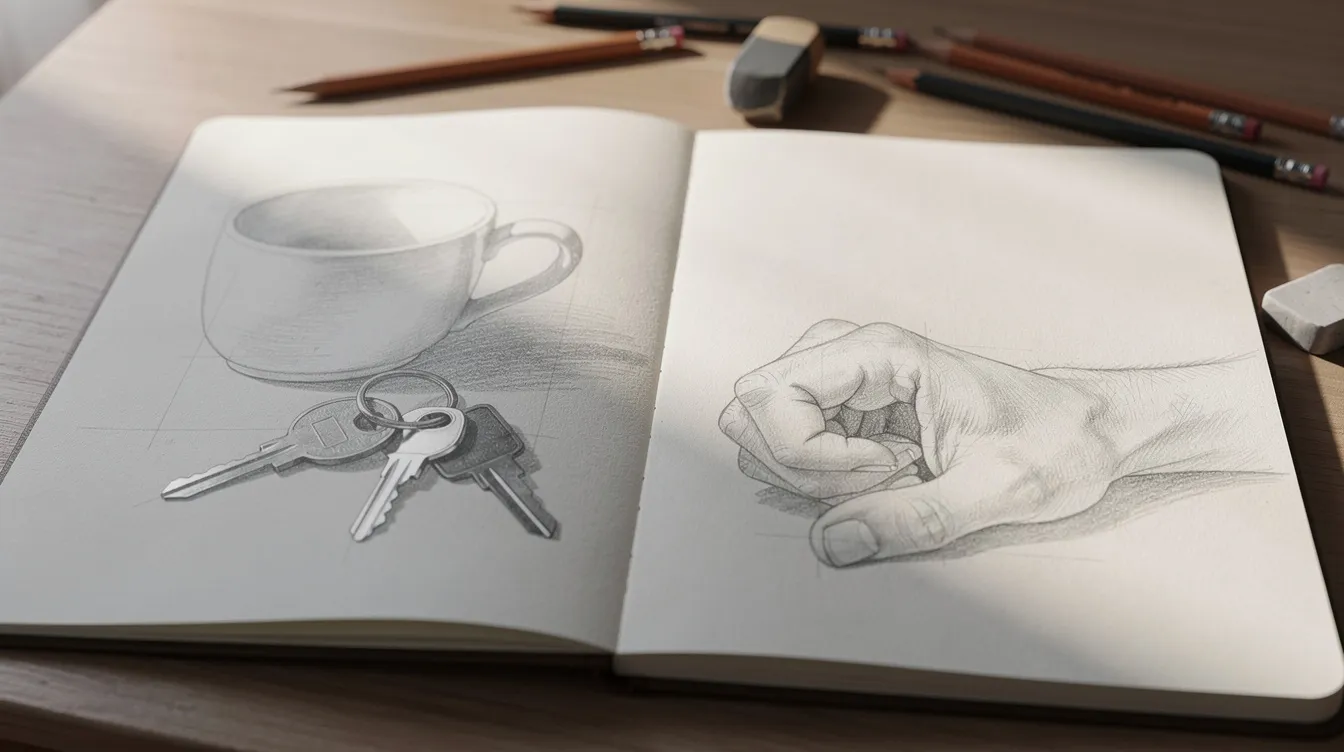
A quick sketch of your coffee cup, your hand, or the view from the window
My first two weeks of drawing after morning coffee were stiff and ugly. Warm-ups looked like something a tired person drew, because they were. But by week four I resisted less. By month two I looked forward to that time more than the late evening sessions I had been forcing.
Step 5: Use Your Lunch Break Like a Mini Studio Session
Most people sit at their desk scrolling during lunch. That is one of the easiest times to convert into drawing practice without touching family time.
You do not need the full hour. Eat first, then grab your sketchbook and a pen and move away from the computer for 15 to 20 minutes. Even 8 to 10 minutes of drawing on a short lunch break counts, and it is enough for a sketch of your mug.
Three ideas that work at any desk or table:
-
Whatever is on the table: the coffee cup, the keys, a coworker’s water bottle.
-
A quick sketch of a colleague across the room (without worrying if they shift around).
-
Objects from your bag: your phone, a wallet, a pen.
Sketching mundane subjects can be just as fun and rewarding as dramatic ones. If you work remotely, sit at a different table or on the balcony so it feels separate from work. If you are in an office, find a quiet corner or a nearby cafe once a week. The point is to spend time drawing in a moment that was going to be wasted anyway.
Step 6: Turn Waiting Time Into Drawing Time
Think about a normal week and the hidden pockets in it. The post office queue. A doctor’s waiting room. Arriving 10 minutes early for a meeting. The car at school pickup while you wait for the bell. Public transit if you ride the train or bus and do not drive.
Drawing while waiting is prime sketching time, and micro-sessions can make drawing more manageable for busy individuals. All you need is a sketchbook or a drawing app on your phone or tablet. Every dead moment is perfect for a quick sketch, even if you only have a few minutes.
On the train I put in headphones and draw while listening to a podcast. It makes the ride feel like a small gift.
Subject ideas for shy beginners:
-
Shoes (less obvious than staring at faces)
-
Parked cars or silhouettes of buildings
-
Fragments only: hands, bags, cups
-
A memory sketch drawn immediately after you leave
Messy, unfinished 3 to 5 minute sketches are valuable drawing practice, not failed drawings. You do not need to produce a finished piece every time you sit down.
Step 7: Carry a Simple, Always-Ready Sketch Kit
You cannot draw in spare moments if your tools are at home or buried in a heavy bag. A small sketch kit removes the excuse, so you can sketch anywhere.
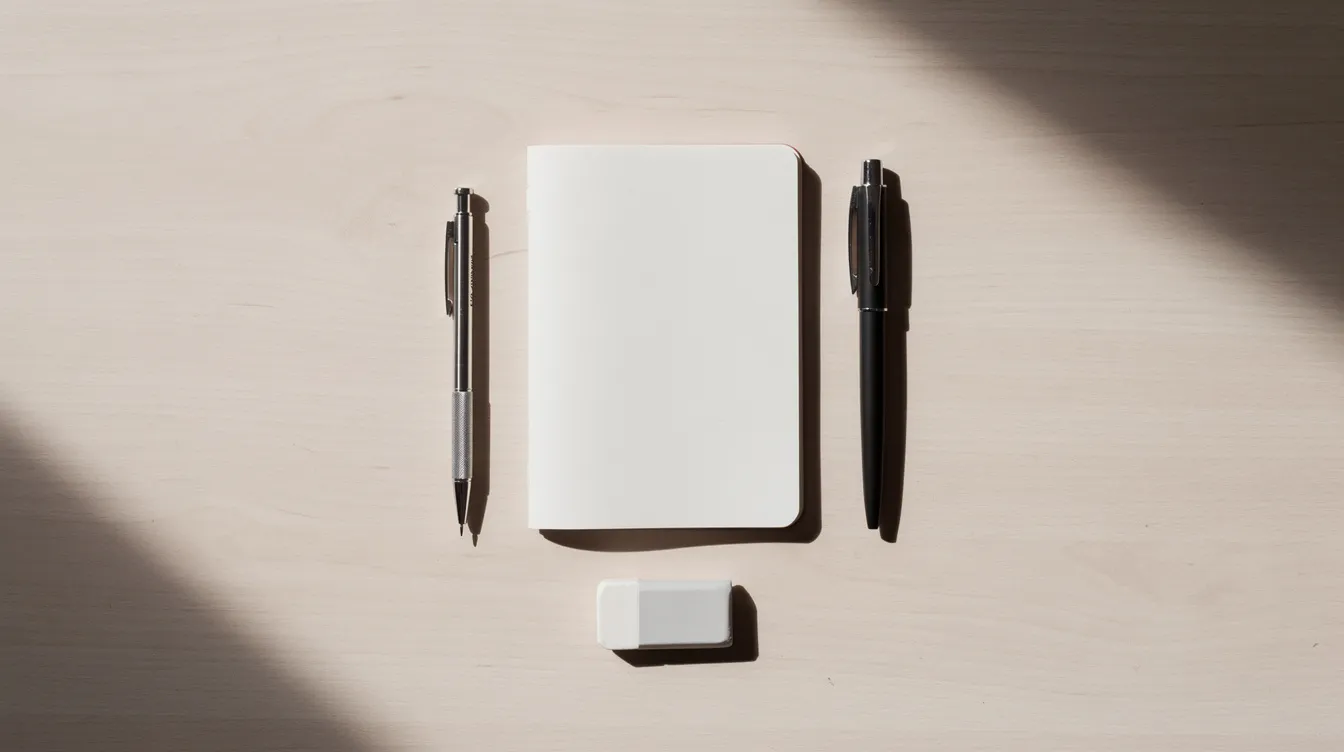
A minimal everyday kit:
-
One small A6 or A5 sketchbook (small pages feel less intimidating)
-
One mechanical pencil or fineliner
-
A small eraser
-
Optionally, one grey brush pen or a couple of coloured pencils
A sketch kit fits easily in a pocket or purse, unlike a big case that takes time to unpack. Every bit of friction you remove, whether that is finding the book, sharpening your tools, or clearing a space, makes starting more likely.
Store the kit in the same visible place every day: the kitchen table, next to your keys, or in your work bag, so you can grab it on your way out the door. Not in a drawer. For digital artists, the equivalent is keeping the tablet charged, the stylus attached, and a “practice” file open so your drawing tools are ready within 30 seconds.
Step 8: Block Time in Your Calendar and Protect It
If drawing is not on the schedule, other things will always expand to fill the space. This is especially true for a person with a full time job and a family.
Open your calendar and add recurring events labeled “Drawing Practice” at specific times. For example: Monday, Wednesday, and Friday, 20:15 to 20:45. Treat drawing time like a non-negotiable appointment with someone else. Only move it for something truly urgent, not mild tiredness or a show you could watch the next day.
Two examples for different lives:
-
A parent with young kids has a drawing session after bedtime on Tuesday and Thursday evening.
-
A single professional has a sketch session from 19:00 to 19:30 before cooking on weekdays.
Tell your partner or roommates about these blocks so they understand this drawing time matters. It also builds an identity as an artist who happens to have a day job.
My bookkeeper brain taught me that a time budget only works if it is written down and reviewed. I put my weekend session in the calendar like any other appointment. Choosing a consistent window for drawing helps establish a daily routine far more than hoping for free time to appear.
Step 9: Match Your Drawing Practice to the Time You Have
A 15-minute slot and a two-hour slot should be used differently. Trying to finish complex pieces in a few minutes leads to frustration. Trying to fill two hours with warm-ups leads to boredom.
Short sessions (5 to 20 minutes): Line warm-ups, gesture drawings, quick head studies, thumbnails, value scales. A useful short session is one object drawn three ways: outline, careful contour, shaded study, which keeps your focus narrow. Treat each one as a quick sketch, not a masterpiece. Sketching in small blocks of time can fit into even the most busy schedule.
Longer sessions (45 to 120 minutes): Full figures, cityscapes, layered watercolor, or digital paintings. Use your protected weekend block, about an hour, to finish a drawing or follow a full lesson from a course or a youtube channel you like. Put on an album and enjoy listening while you work.
Separate practice from projects. Short drawing sessions are for building skill. The weekend is for applying it. Frequency trains your eye and hand more than duration, which avoids the trap where you wait for huge blocks, never start, and then say drawing is too time consuming.
Step 10: Simplify Other Parts of Life to Make Space
Time management is sometimes about consciously doing fewer other things. Not everything. Just a few.
Small tradeoffs I have made, or seen a fellow artist make:
-
One fewer gaming evening a week
-
One round of binge watching swapped for a 60-minute Sunday drawing session
-
Batching chores to free a Saturday morning every fortnight
-
Listening to music or an audiobook while doing housework to finish faster
Pick at most three big priorities for this season, since that is where you spend your energy. Mine were health, family, and drawing. I gave myself permission to be average at other hobbies for a while. Here is a sample Wednesday: simple dinner, no TV, 19:30 to 20:30 for drawing. Not every night. Just that one.
These are experiments for a few months, not permanent life changes. If it does not work, adjust. If it does, keep going. The hope is that after a season you will not want to go back.
Step 11: Make Starting Easy and Keep Expectations Small
After a long workday, the hardest part is starting. Not the drawing itself. The moment of deciding to grab the sketchbook instead of the remote.
Reduce friction by preparing your workspace in advance. Leave the sketchbook open on the desk, tools sharpened, reference printed or on screen. Setting up a drawing space reduces friction to start drawing. Keep your current drawing project ready so you can begin within 30 seconds, even if your space is just one corner of the kitchen table.
Keep a short list of sketch ideas pinned inside the front cover of your sketchbook: ellipses, boxes in perspective, your hand, a shoe, a houseplant. Just pick the next one on the list instead of spending willpower deciding what to draw.
Promote the “just 5 minutes is okay” mindset. You can start drawing in just five minutes, and it still counts as practice. Most evenings, after the first moment of resistance, you will keep going once you sit down. On the evenings you do not, you have still kept the daily habit alive. If it stops being fun, you will stop, so draw things you like. If you want more ideas for keeping that routine going, see my post on tips for drawing every day.
Every short drawing session reinforces that you are someone who finds time to draw, even tired, even on messy days in a busy life. That identity matters more than any single sketch.
Conclusion: A Realistic Path to More Time for Drawing
To find time to draw, you need three things: awareness (do the time audit), small tradeoffs (less scrolling, fewer passive evenings), and structure (block time in the calendar and match your practice to the windows in your daily routine). Start where you can find time, even if it is only a few minutes.
Weeks will fall apart. Illness, deadlines, family emergencies. That is just life. The danger is the story you tell yourself: “I have fallen off, so I have failed.” When that happens, make restarting tiny. Start drawing one thing for five minutes. That is enough time to keep the drawing habit breathing.
My invitation, from one busy person to another: pick one change from this post and try it this week. Not all eleven steps. One. One lunch break with a quick sketch. One alarm set 15 minutes early. One evening of drawing with the phone in another room. My hope is that you will see what a small change can do. Consistent, imperfect practice over months will do far more for you as an artist than waiting for a day when your busy life finally slows down. It never does. Start drawing now, with what you have, in the time you can find.
FAQ
How much time a day should I spend drawing?
Fifteen to thirty minutes a day is plenty for an adult beginner. Consistency matters far more than length, so spend only what you can keep up on your busiest days. Even a few minutes of focus beats an hour of unfocused noodling.
Is 10 minutes of drawing a day worth it?
Yes. Ten minutes of drawing a day adds up to more than 60 hours a year, and short frequent practice builds skill faster than you expect. It also keeps the habit alive on days when you cannot do more, which is half the battle.
What is the best time of day to draw?
Whenever you can do it reliably. Many working adults prefer early morning before the day makes demands. Others like right after dinner in the evening. The best time for drawing is the one you can repeat without fighting your schedule every single day.
How do I stay motivated to draw when I am tired after work?
Lower the bar. Promise only five or ten minutes and a simple drawing subject, and put on some music or a podcast, since listening makes the first minutes easier. Most nights you will keep going once you start, and on the nights you do not, you have still kept the habit going, even on busy nights. It takes time to build momentum, but even a bad sketch on a tired night beats a sketchbook that stays closed.