
You know the pattern. You watch a video, flip through someone’s sketchbook, or stumble on a piece of art by some artist that makes something click. You buy a new set of pens, fill three pages, and ride that feeling for about a week. Then life gets loud, you miss a night, then two, and the sketchbook sits closed on the shelf until the next wave of inspiration rolls in. Staying motivated to draw while you improve can be challenging, and that cycle is more common than most people admit.
I kept the books for a freight company for twenty years, picked up a pencil at 44 the fall my daughter left for college, and have a day job, no art background, and no talent to speak of. I make a lot of bad art, and I am not an artist in any sense a gallery would recognize. So when I tell you I understand slow progress, I mean it. I have lived in that gap between wanting to draw and actually doing it. I decided to start writing it all down, because the world has plenty of advice from people who never had to struggle with any of this.
Here is what I learned after a few years of kitchen table drawing practice: the answer is not more motivation. Motivation is weather. It comes and goes, so long term motivation has to come from something sturdier. What keeps you drawing is a small routine you can repeat without thinking, short projects that have an actual end, and a record that shows you progress even when the feeling is that nothing has changed. That is what this post is about.
Staying Motivated To Draw: Why “Feeling Like Drawing” Is Not A Plan
I quit for about three weeks in my first winter. I was tired, the drawings looked bad, and I told myself I would wake up one day and want to draw again, that the feeling would simply come back on its own. It did not. I came back because the sketchbook was still open on the kitchen table and I picked up a pencil while the coffee brewed. It was not dramatic. It was a Tuesday, and it ended the longest break I have ever taken from drawing.
That is the difference between motivation and habit. Motivation to draw is the emotional spike you get from discovering a new artist on Instagram or flipping through gorgeous art books. A habit is sitting down at 8:30 pm with your sketchbook even when the feeling is gone and drawing seems unappealing after work. Fleeting inspiration is less reliable than developing a consistent drawing routine, and most adults figure this out the hard way.
Think about a Tuesday after a 9 to 5 and chores. You have maybe twenty minutes before you run out of steam. Motivation says wait for the right feeling. Habit says this is the time, this is the chair, start with one line. Building a habit makes drawing easier than relying on motivation. In my bookkeeping days, nobody was motivated to reconcile accounts on a Tuesday. It got done because it was Tuesday. It does not matter whether you are in the mood. Maintaining motivation requires building sustainable habits, and making art works the same way. Long term motivation is mostly a side effect of showing up, not a cause of it.
Diagnosing Your Art Slump: Block, Burnout, Or Just Tired?
Before you try to draw your way out of a slump, figure out which kind you are in. The fix for each one is different.
Art block looks like this:
-
You want to draw but nothing good comes out on the paper
-
You start three things, hate all of them, and close the sketchbook
-
You struggle with one specific skill and keep circling the same mistakes
Burnout looks like this:
-
You do not even want to open the sketchbook
-
The thought of sitting down to draw brings dread, not excitement
-
The feeling is easy to mistake for laziness, but creative burnout is emotional exhaustion wearing a different costume
Plain tiredness looks like this:
-
You are physically spent from a long workday, family demands, or illness
-
You could happily draw if your body had the energy
-
A good night of sleep or a lighter week usually fixes it
Knowing which one you are in changes everything. Art block needs a change of subject or new techniques. Burnout needs a real break and maybe a return to what made you want to draw in the first place. Tiredness needs sleep, not a strategy. The sections that follow will help with all three, and every artist I know has landed in each of them at some point.
How Other Artists Help Or Hurt Your Motivation
Here is a scene I know you recognize. You open an art feed to look for references, and ten minutes later you feel crushed. Everyone else in the world seems faster, better, more talented. Every artist in the feed has it together. You close the app and do not draw that night. I once deleted a post I was proud of because someone else’s looked better. Comparing early sketches to polished art can kill motivation faster than anything else.
The fix is not to stop looking at other artists. It is to change how you look. Treat an artist you envy as a free teacher, not a rival. Comparison can be a learning signal, not a performance evaluation. Instead of measuring your sketch against someone’s finished piece, pick one skill to study. For example, look at how they simplified the shape of a head, or how they handled a shadow, then draw that one thing three times. Do a 30-minute study of a single painting to learn gesture or value, not to copy it perfectly. Every artist you admire once had to draw terrible hands, and most of them kept the evidence in old sketchbooks.
I am part of a sketching group that meets every other week. Most members started after 40. There is a retired nurse, a long-haul trucker, a dentist, and two grandmothers. Not one of them calls themselves an artist, and every one of them can draw. We sit around a table and draw for two hours, and I leave with a pocketful of ideas. Someone will post a photo of their week’s pages in our group chat, and it nudges me to create something of my own. Even in weeks when I had no feeling for drawing, I have never regretted going. A supportive community can enrich the art you make, and seeing other people struggle with the same things reminds you that slow and steady is how it usually goes.
If there is no local group near you, an online community works fine, as long as you post your work and get honest feedback rather than just compare. The goal is connection, not competition.
Designing A Drawing Habit You Can Actually Keep (Even With A Full-Time Job)
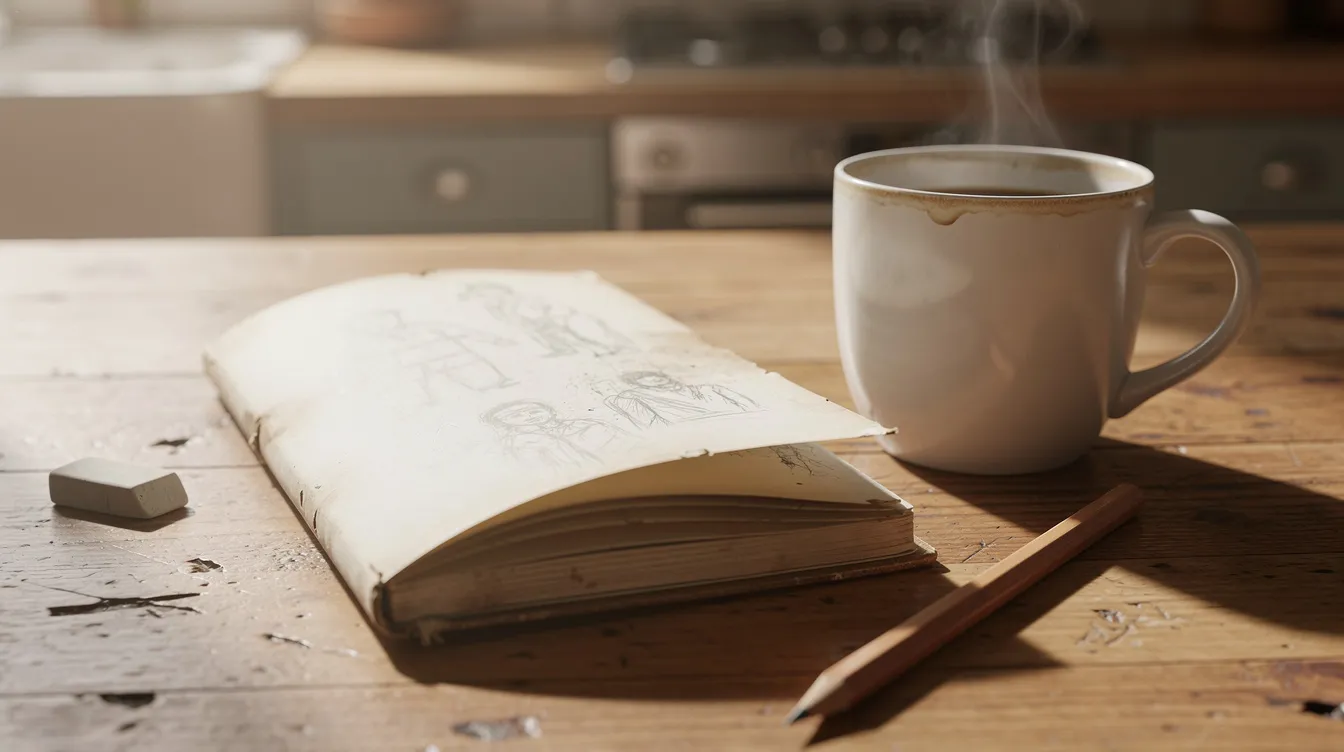
My routine is forty minutes at the kitchen table after dinner, same chair, same lamp, with the sketchbook and pencil already sitting there so the only decision is whether to sit down and draw. That is it. No studio, no special lighting rig, no separate room. A working artist might have those, but I am not one. Most of my art gets made at that table. Daily practice keeps skills sharp and motivation high, but only if the habit is small enough to survive a bad week.
The idea is a “minimum viable habit.” For some people that is twenty minutes most evenings. For others it is one hour on weeknights. Place the routine next to a stable event in your day, for example after breakfast, after the commute home, or after the kids are in bed. The more predictable the trigger, the easier it is to draw without leaning on willpower. It does not matter which event you pick, only that it can happen even on your worst day. If you want the longer version, read how to build a daily drawing habit.
If you miss a day, do not punish yourself. Just draw the next one. A streak is not worth the guilt you feel when you break it. Even daily practice of 15 minutes improves skills steadily, so the bar does not need to be high. Set small goals to maintain motivation: a page of cubes, a single hand, three gesture sketches. “Get better” is not a goal. “Draw five hands this week” is.
If your main obstacle is a packed work schedule, the key is protecting a small time block the way you would protect a meeting. Put it on the calendar. Treat it like an appointment to draw that you would not cancel for a coworker. For more on this, see how to find time to draw with a full-time job.
Pairing Drawing With Existing Habits So You Don’t Need Willpower
Habit stacking is a simple idea: attach “time to draw” to something you already do every single day without fail. It lowers friction and sidesteps the question of whether you are in the mood. Pair drawing with another daily habit to build consistency, and the habit carries you when the feeling does not.
Here are a few pairings that work for people with regular schedules. My own favorite, for example, is the first one:
-
Draw shapes and lines while the morning coffee brews
-
Do three quick doodles after checking your work email in the evening
-
Draw for five minutes after taking your meds or vitamins at 9 pm
-
Draw one sketchbook page after the dishes are done
-
Sit down with a pencil during the first ten minutes of a podcast you listen to daily
One more thing: keep your drawing tools ready to reduce setup friction. Leave your sketchbook and pens out where you will see them. Every step between you and the page is a chance to skip. If you have to dig through a drawer, find the right page, and sharpen something, you have already talked yourself out of it three times.
Pick one existing habit and add a tiny drawing action to it for two weeks. That is the challenge.
Start Small: The Five-Minute Rule That Gets Your Hand Moving
Promise yourself five minutes and give yourself full permission to stop afterward. On a bad day, that is the whole session, and it still counts. Draw for just 5 minutes to overcome resistance. Drawing for just five minutes can lead to longer sessions, because starting is almost always the hardest part.
Here are concrete five-minute tasks you can do without thinking:
-
Draw a page of circles, boxes, and cylinders
-
Do gesture drawings from a free pose site, one minute each
-
Sketch your mug from three angles
-
Copy a single panel from a comic or a page from one of your art books
Not every piece of art needs to be perfect to progress. Drawing should be a low-pressure, enjoyable activity, and small goals like these keep it that way. The aim is the feeling of having shown up, not a perfect page. Start with simple tasks to avoid overwhelming yourself, especially on days when your body is tired and your brain is loud.
One trick: stop while you still have a little motivation left. It sounds backward, but ending on a good feeling makes tomorrow’s session easier to start and can lead to a longer one the next day. To draw is a physical, sensory experience that should be enjoyed, and leaving the table wanting more is better than leaving it drained.
Cycling Through Subjects And Skills So Drawing Feels Fresh
When you draw the same thing every session, you breed boredom, which looks a lot like lost motivation. But jumping between big, ambitious projects overwhelms you in a different way. The middle ground is small projects with a clear end.
“Get better at drawing” has no finish line. These do:
-
Draw every object on your desk, one per day, for two weeks
-
A page of twelve eggs, each one lit differently
-
Your morning mug from five angles
-
A weekend spent copying one study by an artist you love
-
Set a goal to draw 100 small head sketches over a month
Finishing a project and choosing the next one gives you the feeling of progress even when your skills seem stuck. Experimenting with different techniques can rekindle your interest in art, and variety keeps things alive and your motivation up. Even basic techniques borrowed from another artist, like hatching or smudging, feel new in a different medium. Learning a new medium can help you create in ways you did not expect. If you have only used graphite, try ink or charcoal for a week and draw the same mug again. For example, ink forces you to commit to a line. A new medium changes the rules enough to make familiar subjects feel unfamiliar.
A simple weekly routine helps: Monday figures, Wednesday still lifes, Friday just for fun, Sunday fundamentals like perspective or shading. If you have one hour, split it into 15 minutes of gesture warm up, 30 minutes of a longer study, and 15 minutes of imagination or free drawing.
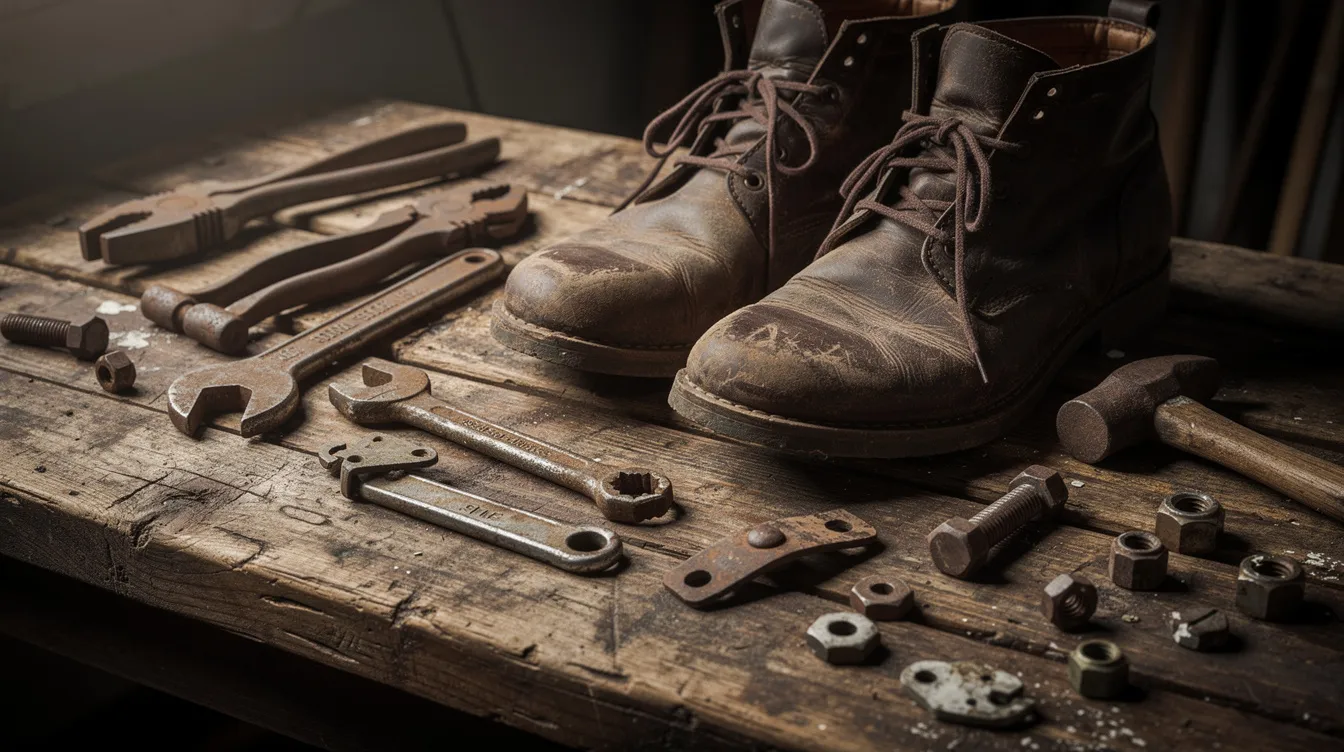
Variety helped me find what I actually like. I had decided I would want to draw portraits. Turns out I enjoy old tools, boots, and hardware, objects with wear on them. You will not know what you find interesting until you try enough subjects to surprise yourself.
Beating The Blank Page: Always Know What You’ll Draw Before You Sit Down
Staring at a blank page while your short window disappears is not an art problem. It is a decision problem, and even a professional artist has it. The fix is to decide what to draw outside of drawing time so your sessions are for action, not indecision.
Keep a running list of ideas on paper or in a notes app. It does not need to be clever. Twenty household objects to draw. Ten photos of hands. Five family portraits to draw from old photos. Three city scenes from your commute. Prompt sources include random object generators online, your kitchen drawer, and neighborhood walks where you snap quick reference photos on your phone. Writing the list takes ten minutes on a Sunday, and it saves you a dozen blank starts.
Before your next session, spend five minutes writing out at least five ideas. When you sit down and open the sketchbook, you already know what goes on the page, so the list can lead you straight to it and you can create instead of deciding. That is one less reason to skip.
Handling Negative Feelings About Your Art Without Quitting
The loudest thoughts tend to arrive right after a bad session or ten minutes of scrolling other artists’ work: “I am too old to start drawing.” “I have no talent.” “Everyone else is improving faster.” These negative feelings are normal, and they do not mean you should quit. That sinking feeling of being behind is something every artist has felt, including the ones you envy.
Here is what helped me in my first winter, when the skill plateau hit hard. Most skills follow a learning curve: fast early gains, then a slower stretch where it feels like nothing is going to happen. Artistic improvement tends to happen gradually, making it hard to notice daily changes. That flat stretch is not a personal failing. It is how learning works, whether you are learning drawing skills, a language, or an instrument, like every other skill in the world. If you want more structure for that stretch, these online drawing courses for beginners are a good next step.
Your eye improves faster than your hand. That means you start seeing flaws you could not see before, so your drawings seem worse even as they get better. That feeling is a good sign wearing a bad costume. I still struggle with hands, and I have stopped taking it personally.
Here is a practical tool: date every page, and add a few lines of writing about what you tried. Once a month, lay out early pages and recent ones side by side, and look for one small thing that changed. A steadier outline. A better shadow under a cup. Tracking progress helps visualize improvement over time. Like a ledger, the balance does not change no matter how you feel about it. Each unsuccessful drawing provides information for future improvements, and the dated pages prove it.
Documenting the creative process can shift focus from final results to learning. On days when self-criticism is loud, drop the ambitious piece and draw low-stakes line exercises or simple shading techniques instead. Even the art you make on a tired evening counts. The hand still moves, the habit survives, and you do not have to create a masterpiece on a difficult night.
If you ever catch yourself thinking it is too late to learn to draw, remember that I started at 44 with a drugstore sketchbook and no background. Plenty of people in my sketching group started later than that and still draw every week. If that thought keeps coming back, read it’s too late to learn to draw.
When Drawing Feels Like A Chore: Resting Without Losing Momentum
There is a difference between a planned short break and disappearing from your art for three months. One protects you. The other makes coming back feel enormous.
Plan your breaks. I decided to skip Saturdays and return on Sunday to draw a light, fun subject. No pressure, no guilt. A planned break can improve creativity and problem-solving, and the rest often makes the next session feel easier than the last one. It is part of a healthy routine, and if a hard week does happen, you are still allowed to rest.
Watch for early burnout signs: a feeling of dread before every session, constant irritation about your work, or drawing only because you feel you should post something. If that is where you are, take a break for a few days. A short break does not undo your progress.
The trick is making the return easy. Keep the sketchbook and pens where you will see them. When you come back, draw what made you fall in love with art in the first place, whether that is characters from a favorite show, copying a favorite artist, simple nature sketches, or doodles with no purpose at all. You do not have to post any of it, of course. The only goal is to create something, anything, so the table feels familiar again.
Practical One-Hour Schedules You Can Copy This Week
Schedule a one-hour drawing session weekly to build consistency, and schedule a specific drawing hour to protect your practice. If you can draw for one hour daily, you will make more progress than with sporadic sessions, but even one protected hour a week is better than zero. Here are three routines you can try.
Weekday evening (one hour after dinner):
|
Segment |
Time |
What to do |
|---|---|---|
|
Loosen up |
10 min |
Blind contour or gesture sketches |
|
Focused practice |
30 min |
One skill: value, perspective, or proportion |
|
Free drawing |
20 min |
Draw anything you want, no rules |
Sunday afternoon (one hour with coffee or tea):
|
Segment |
Time |
What to do |
|---|---|---|
|
Loosen up |
5 min |
Loose shapes, circles, boxes |
|
Study |
40 min |
Copy an old master or a photo you like |
|
Reflection |
15 min |
Flip through recent pages, note progress |
Lunch break (30 minutes, scaled down):
|
Segment |
Time |
What to do |
|---|---|---|
|
Quick sketch |
15 min |
One object in front of you, pen only |
|
Doodle |
15 min |
Faces, hands, whatever is nearby |
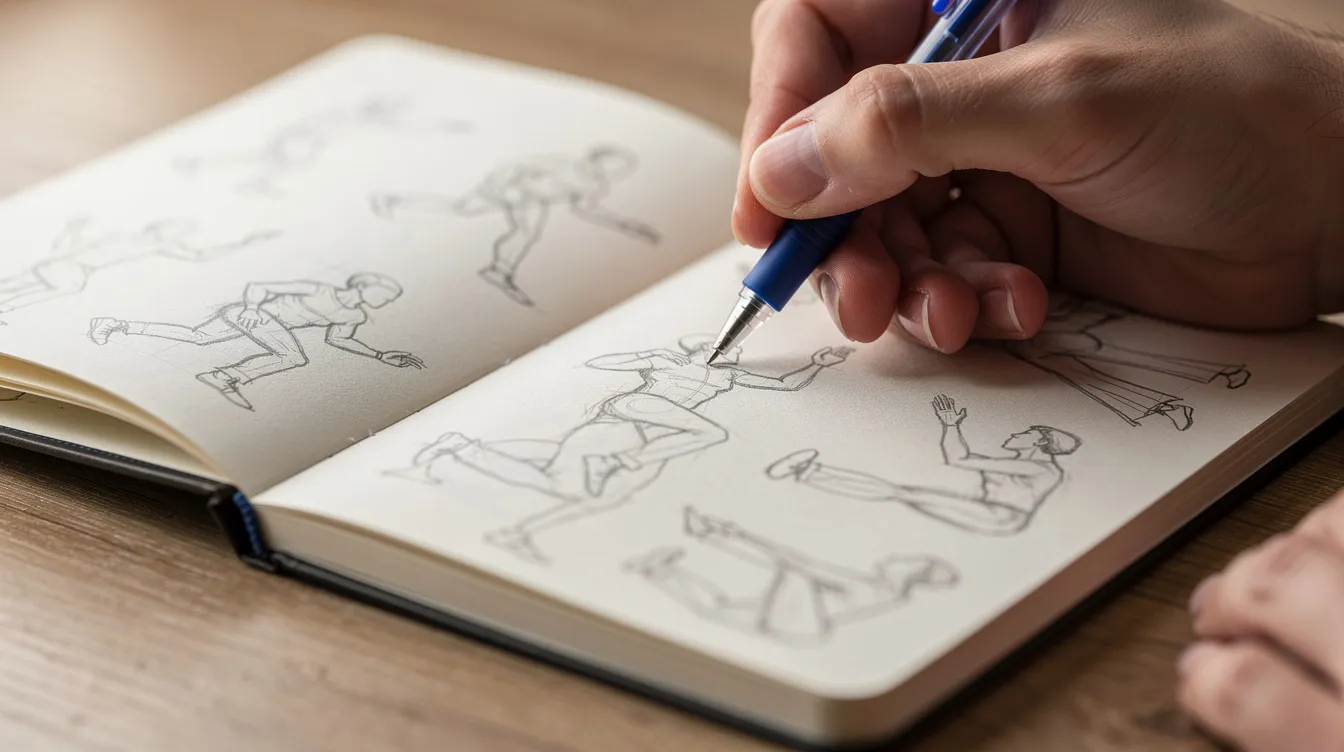
Use a phone timer. A cheap A5 sketchbook and a ballpoint pen are all the things you need. Turn off notifications, and do not scroll a single post until the timer ends. Pick one of these schedules and put it on your calendar this week like any other appointment. If you can draw for an hour every day, even better, but if you can only protect one day, start there.
Where To Find Motivation And Inspiration To Draw In Everyday Life
Waiting for big inspiration is a trap. It keeps you idle while the sketchbook gathers dust. Small daily observations are more reliable fuel than a sudden vision of something you want to create, and more dependable than any burst of motivation.
Finding inspiration is easier than you think when you start looking at the world around you. Your morning commute, your office desk, the grocery store, old family photos. I keep coming back to worn objects: boots left by the back door, the old wrench in the garage, a paint can with drips dried on the side. These are the subjects I never expected to turn into art, and they give me the feeling that ordinary things have stories worth telling. Every artist I know keeps a stash of reference photos, and you should too.
Engaging in creative activities can reignite inspiration, so capture ideas before they slip away. Snap reference photos on your phone. Do tiny thumbnail sketches while you wait in a queue. Try writing subject ideas in your notes app while riding the bus or sitting in a coffee shop. Save any post that makes you want to draw, and pull from that folder when you are stuck. Let one photo lead to a mini project: a week of drawing only kitchen objects, or a series of the same mug under three different lamps.
Right now, look around the room you are in. I will wait. There are at least three things within arm’s reach that you could draw tonight. A stapler, a shoe, a water glass. That is all the inspiration you need.
Bringing It All Together: Your First Week Of A New Habit
You do not need perfect motivation. You need small, repeatable actions, short projects with an end, and a record that shows you where you have been. That is the whole answer.
Here is a simple 7-day plan built from small goals. Use a single pen so decisions stay minimal.
-
Monday: 5 minutes. Draw three circles and three boxes. That is the whole session.
-
Tuesday: 5 minutes. Sketch one object on your desk.
-
Wednesday: 5 minutes. Gesture draw from a free pose reference, one minute per pose.
-
Thursday: 5 minutes. Copy a small section of a drawing you admire from one of your art books.
-
Friday: Take a break or doodle for fun. No pressure.
-
Saturday: 20 to 30 minutes. Pick a subject from your list of ideas and do a longer study.
-
Sunday: Flip through the week’s pages. Date them. Notice one small thing that feels different from day one. Do not post them anywhere unless you want to.
Treat this week as an experiment, not a test. If you miss a day, sit down the next one. If a session goes badly, it does not matter much. The process counts for more than any single page, and that is how a routine gets built. You do not need to wait for the feeling of passion or inspiration or confidence to pick up a pencil. You just need a piece of paper and five minutes to draw.
I started this whole thing because my house got quiet and I did not know what to do with myself, so I decided to draw something, anything. Three years later I am still at the same kitchen table, still learning, still happy to create pages that are not very good. But they are better than the first ones, and I have the dated sketchbooks to prove it. One day you will flip back to your first page and laugh. That is enough. It is more than enough.
FAQ
What should I do when I don’t feel motivated to draw?
The short answer is to draw for five minutes and give yourself permission to stop. Motivation rarely shows up on cue, and starting is the hard part. Even if the five minutes does not grow into something longer, you have kept the habit alive for another day, and that matters more than any single drawing.
How long does the plateau last?
The honest answer is that it varies, but for many adults the skill plateau lasts a few weeks to a few months. Growth in perception and vocabulary often continues even when visible improvement feels stalled. Working on one specific skill, like value or gesture, or changing subjects for a while often helps you push through. The plateau does not mean you have stopped learning. It means the gains are smaller and harder to see. This will happen to nearly every artist who sticks with it, and it passes.
Is it okay to take a break from drawing?
Yes. A short break does not undo your progress. Make the return easy by leaving your sketchbook and pens where you will see them, and come back with something light and fun rather than a big ambitious piece.
Do I need to share my work to stay motivated?
No, but sharing with one or two people you trust can help, and you never have to post publicly. Choose people who give honest, kind feedback and avoid places where everyone is competing for likes. If sharing feels stressful, private tracking works too. Compare your own pages from one month to the next. That is all the accountability you need to stay engaged and keep going.